Ah yes, the post-Christmas fog. By now you have hopefully shaken off the back-to-work fear, survived ice-rink roads, and hacked your way through the inbox war zone. But while you were off and a tin of Roses counted as a balanced breakfast, AI did not rest.
It kept evolving. Faster than your New Year’s resolutions are quietly fading.
Welcome to your bi-monthly AI cheat sheet from AiSe, where the goal is simple: make sense of what’s happening, cut the fluff, and keep it useful for real businesses.
1. AI Platforms Have Stopped Pretending They’re Free
Remember when AI tools felt like that generous friend who always picked up the tab? That phase is officially over.
The big platforms are tightening access and nudging users toward paid plans at speed. Turns out running massive AI models costs actual money. Who knew.
What changed over Christmas:
OpenAI limits tightened
Free users are now capped at around 10 advanced messages every 5 hours. If you rely on AI daily, you either pay or accept the “lite” experience, which feels a bit like decaf pretending to be coffee.
Google Gemini quietly squeezed
Gemini 3 Pro access for free users has been reduced under the banner of “high demand”. Basic mode now comes with soft daily limits, currently hovering around 20 requests per day and changing based on usage patterns. Or mood. It’s Google.
Grok joined the monetisation club
xAI is gently steering users toward “SuperGrok” through subtle usage caps. Free forever does not keep the servers warm, even if Elon really wants it to.
The real takeaway:
If you are training AI on your company’s data, or relying on it across teams, the free ride is ending. Expect more paywalls, bundles, and tiered access in 2026. Smart businesses will audit usage now rather than panic later.
At aise.ie, this is already becoming a recurring conversation with clients.
2. Grok Is Exploding in Popularity, and the EU Is Watching Closely
 Among power users, Grok has been getting serious praise over the holidays. Prompt engineers are openly comparing it favourably to ChatGPT for certain tasks.
Why people like it:
Grok is plugged directly into X, still the fastest-moving source of breaking news. That gives it real-time advantages others struggle with.
When news broke in Venezuela recently, ChatGPT played it safe with “unverified reports”. Grok delivered context, sources, and evolving updates like a caffeinated newsroom editor. Users also love it for tearing through large PDFs, finding flight deals, and surfacing niche insights quickly.
But here’s the problem:
This week, reports emerged that Grok’s image generation tools were being used to create explicit images of real people. This is exactly the sort of thing EU regulators do not tolerate.
Other major platforms have strict guardrails here. xAI appears to have shipped an update that left a door open. The EU is now engaging, and history suggests they will not be gentle.
If regulation lands hard, Grok’s momentum could stall just as it was gaining legitimacy. A big opportunity, potentially squandered.
3. 2026 Is the Year of “Agentic” AI
If there is one word you will hear constantly in 2026, it is agentic.
In 2023, AI wrote poems.
In 2024, it summarised your unread emails.
In 2026, it is making decisions and completing transactions.
AI agents are moving from “assistant” to “operator”.
What launched recently:
Perplexity: Buy with Pro
Released late December, this allows users to complete purchases directly within AI search results.
Google Gemini going agentic
Recent updates push multi-step reasoning, allowing Gemini to research, compare, and execute purchases without handing off to traditional search flows.
Translation for businesses:
If your website cannot be understood by machines, AI agents will simply skip you. No ranking battle. No second chances. You either exist in the agent’s world, or you do not.
Sector Watch: What This Means for You
 Hospitality: The Invisible Guest Has Arrived
What’s happening:
Visa and AWS announced AI-embedded payments infrastructure in late December, enabling automated, agent-led transactions.
What it means:
Guests will not always “visit” your website. Their AI will. It will check availability, compare pricing, scan policies, check menus and amenities, negotiate, and book while the human sleeps.
Your front desk will increasingly interact with bots before people.
What to do now:
Unstructured data, image-only menus, and messy pricing tables are invisible to agents. Clean, structured, machine-readable data is no longer optional.
This is exactly where AiSe helps hospitality brands modernise without ripping everything apart.
Retail: Welcome to Snap, Search, Buy
What’s happening:
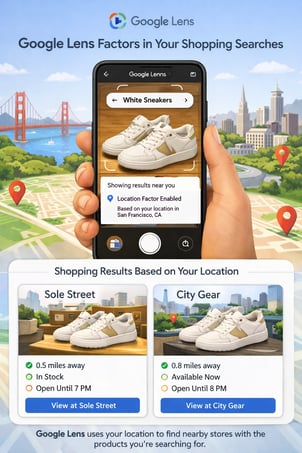
Visual search accuracy surged at the end of 2025, driven by upgrades to Google Lens and AI shopping tools.
What it means:
Typing product searches is fading. Shoppers point a camera at a kitchen, a jacket, or a lamp and AI finds suppliers instantly. Including local ones.
Impulse buying just got frictionless.
What to do now:
Your product images matter more than your product descriptions. Clean tagging, alt text, structured metadata, and consistent imagery are now sales drivers, not admin chores.
Lazy tagging equals lost revenue.
Professional Services: Clarity or Chaos
What’s happening:
GPT-5.2 shipped in December with improved reasoning and reduced hallucinations. So too has Gemini in November.
What it means:
AI will no longer politely guess what you meant. If your brief is vague, the output will confidently deliver the wrong thing. At scale.
The era of blaming AI is ending. Garbage instructions still produce garbage outcomes.
What to do now:
Clarity is the most underrated skill of 2026. Clear thinking, clear prompting, clear leadership. You need to know what you are and what you need more than ever and that means humans working it out. Not asking AI to fill in the gaps. That comes later.
AiSe already runs training focused on turning teams into confident AI operators rather than frustrated passengers.
Final Question
AiSe exists to help businesses stay visible, credible, and discoverable in an AI-first world.
AI should work for you, not the other way around.
What’s the biggest AI question keeping you awake right now? Get in touch and see how AiSe can help.